Michael possessed over 30 years of experience in Information Technology with focuses on complex application development, database technologies and IT strategy. He also spent the last 20 years in Internet technology, eCommerce development / operations, web usability, computer security and Public Key Infrastructure technologies.
Thrilled! My latest #crowdfunding project just arrived, and it’s fantastic! It’s a pair of Bluetooth retro radio speaker, handcrafted with vintage Nixie Tubes. Believe it or not, I waited for 4 years for this one 😅.
This also marks the final outstanding delivery from the 77 projects I’ve backed over the last 13 years! That’s 72 fulfilled, with 5 projects sadly not making it.
I absolutely love supporting creators and turning their dreams into reality. Crowdfunding isn’t just about getting a product; it’s about being part of a journey, backing visionaries, and seeing groundbreaking ideas come to life.
Every successful campaign is a testament to the power of community and the drive to create. Even the failures teach us valuable lessons.
If you’re passionate about #innovation, I encourage you to explore the world of crowdfunding. You’ll be amazed at the talent and ingenuity out there. Let’s keep backing those dreams and I’m looking forward to the next project to back.
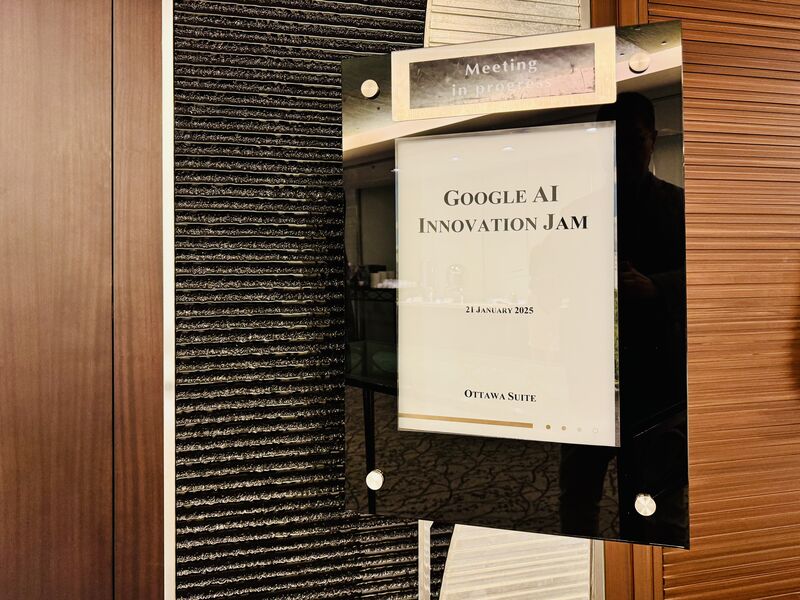
After spending considerable time as a hackathon judge, I found myself on the other side of the table as a participant. Stepping back into the arena was a humbling experience, highlighting just how rapidly the tech landscape evolves.
With my teammates expertly handling infrastructure and databases, I focused on leveraging Generative AI. This involved diving deep into Jupyter Notebook and Python, utilizing APIs and prompts to develop scripts, audio, visuals, and multimedia compositions. It was a challenging yet rewarding process that culminated in our team receiving the Innovator award.
Following this, I was unexpectedly tasked with managing a simulated incident centered around PII and Data Residency. This experience further emphasized the critical importance of understanding and addressing data privacy and compliance. Our team’s collective effort in navigating this challenge led to another successful outcome. The whole team got beanies!
This hackathon served as a powerful reminder of the value of continuous learning, teamwork, and the ability to adapt in a fast-paced environment. I’m grateful for the opportunity to have participated and for the valuable insights gained.
New models, tools, and platforms seem to pop up daily, leaving many enterprises feeling overwhelmed and unsure where to start. It’s easy to get caught in the “buzzword paralysis,” leading to inaction. But in today’s fast-paced environment, inaction is a risk we can’t afford.
Instead of being daunted by the sheer volume of AI possibilities, let’s shift our perspective. Here’s how enterprises can navigate the AI maze and turn it into a strategic advantage:
1. Focus on Business Problems: Identify core challenges and explore AI solutions, rather than forcing AI into irrelevant areas.
2. Prioritize Experimentation: Start with small pilot projects and proof-of-concepts to test different AI models and tools.
3. Build a Cross-Functional Team: Collaborate across departments to ensure alignment and a holistic view of AI initiatives.
4. Leverage Existing Resources: Utilize existing data and cloud-based AI platforms to reduce time and cost.
5. Measure and Iterate: Define metrics, track performance, and continuously refine your AI strategies.
Don’t let the AI maze paralyze your company. Embrace experimentation and focus on solving real business problems. AI is a tool, not a magic bullet.
If you’re interested in knowing more about how you can unlock business value with our AI innovation Jam and AI Trailblazer programme, talk to us!
I’m not sure whether it’s another six more weeks of winter, after all I’m not the weatherman Phil. However, it also perfectly mirrors the cyclical nature of tech, especially IT. We see trends resurface, rebranded, promising revolution yet again. Sound familiar?
Think mainframes “dying” only to reappear, client-server’s rise, fall, and rise again, the endless churn of programming languages, and the constant security rollercoaster. It’s a daily Groundhog Day of repeating familiar patterns. And now we’re seeing it with newer tech too:
🌠 AI’s Hype Cycle: AI has been “the future” for decades, experiencing waves of hype and disillusionment. We’re currently in another cycle fueled by generative AI, but will it deliver on its promises or face another “AI winter”?
🌠 Web3’s Decentralized Dream: Web3 promises a decentralized internet, but echoes of past distributed systems and peer-to-peer networks resonate. Will it truly revolutionize the web, or is it just a repackaged version of earlier ideas?
🌠 Cloud’s Evolving Landscape: Cloud computing is constantly evolving, with new architectures and services emerging. But are we truly innovating, or just repeating patterns of centralized computing with a new name?
This isn’t all bad. We learn from past mistakes and refine existing tech. But we shouldn’t just blindly chase hype. We need:
✅ Strong Fundamentals: Core computer science principles are key, regardless of trends.
✅ Critical Evaluation: Don’t just jump on bandwagons. Assess true potential, especially with hyped tech like AI and Web3.
✅ Continuous Learning: The landscape evolves. Embrace lifelong learning to keep up with cloud advancements and the ever-changing tech world.
So, as we mark another Groundhog Day, let’s reflect on our industry’s cycles. Let’s learn, adapt, and build a future of real innovation, not just repeated days. Let’s break the cycle and find our spring of true tech advancement, even amidst the hype of AI, Web3, and the cloud.
Talk to us, let us help you to go thru this Groundhog Day, with strong technology fundamentals, proven use cases with business value and excellent training resources.




 M.Y. Lessons Learnt