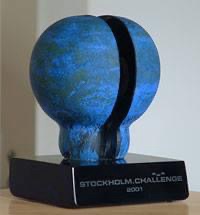
Success is often built on what happens at 2:00 AM

We often celebrate the launch ceremonies and the awards, but we rarely talk about the chaos right before the ribbon-cutting.

Back in 2001, my team was preparing to launch Hong Kong’s first comprehensive e-government platform. But at 2:00 AM on launch day, we discovered a show-stopping issue: a missing SSL Certificate on a key server.

There was no “download from the cloud” back then. I had to physically go get it.

I took a taxi to the Certification Authority in Kwun Tong, told the driver to keep the meter running, and rushed into the data center. An hour later, I emerged with a floppy disk in a brown paper bag-the missing piece of the puzzle.

As I jumped back into the cab and told the driver to floor it, he looked in the rearview mirror and asked, “Mission accomplished?”

“Accomplished,” I said.

He smiled and drove us to the finish line. He probably thought we were spies, but the reality was just as high-stakes for us. The system went live, and the project went on to win the Stockholm Challenge Award.

Reflecting on this 25 years later, the technology has changed, but the lesson hasn’t: Delivery isn’t just about code; it’s about doing whatever it takes to get the job done.

2026, I’m Ready

Goodbye, 2025.

For many, this was a year of silent grinding. You put in the work. You showed up early. You stayed late. You trained hard.

And yet, maybe the promotion didn’t happen. Maybe the deal didn’t close. Maybe the scale didn’t move.

Do not confuse a delay with a denial.

The gap between “doing the work” and “seeing the result” is where most people quit. But you aren’t most people.

If 2025 was the grind, make 2026 the breakthrough. Keep the standard high. Keep the foot on the gas.

Remember: You didn’t come this far to only come this far.

Let’s get to work.

#Motivation #NewYearGoals #KeepGoing #2026Ready

The Hidden Message, The 9 Pages, and The Wrong Tool

Happy Genesis Block Day.

On this day in 2009, Satoshi Nakamoto mined the first block of Bitcoin. Buried deep within the coinbase parameter was a hex-encoded string that decoded to a stark headline from The Times:

“Chancellor on brink of second bailout for banks.”

It was a timestamp, but it was also a mission statement. It signaled the shift from opaque centralized finance to a system defined by absolute mathematical transparency.

Yet, nearly two decades later, I still hear people challenge the “vagueness” of blockchain.

My response is always the same: Read the “Bitcoin: A Peer-to-Peer Electronic Cash System whitepaper.

It is only 9 pages long.

It’s not vague; it is a masterclass in transparency. If you read it, you understand that the “vagueness” exists only in the commentary, not the code.

The same logic applies to the current wave of AI skepticism.

I constantly see posts mocking LLMs because a chatbot couldn’t solve a simple math problem or hallucinated a fact. “It’s broken,” they say.

My response? Read the “Attention Is All You Need” whitepaper.

If you understand the architecture, you understand that these models are probabilistic next-token predictors, not deterministic calculators. When you ask a language model to do strict arithmetic, you are essentially asking a creative writer to do your accounting.

It comes down to this:

🔹 Bitcoin is the right tool for trustless, transparent value transfer.

🔹 LLMs are the right tool for pattern matching, summarization, and generation.

The tools aren’t broken. We just have to stop trying to use a screwdriver to hammer in a nail.

Right tool for the right task.

#Bitcoin #GenesisBlock #Blockchain #AI #TechLiteracy #Satoshi

The Hidden Risks: When the Safety Layer Becomes the Danger 

The devastation in Tai Po has left our city in mourning. Like many of you, I am heartbroken by the loss of life.

Experts have noted that the bamboo scaffolding itself likely wasn’t the primary culprit. While I have always admired bamboo for its flexibility and strength, this tragedy highlights a critical truth: structural integrity alone is not enough.

This offers a sobering reflection for the technology sector.

We often obsess over the “Bamboo” – our core logic, algorithms, and new AI features. Meanwhile, we treat the “Netting” – our security guardrails and compliance, as secondary wrappers.

But as this tragedy reminds us, system integrity isn’t just about the skeleton. It is also about the quality of the protection.

  • The Bamboo (Core): The functionality we build. It must be resilient.
  • The Netting (Protection): The governance we apply. If this layer is substandard or implemented merely to “pass inspection,” it doesn’t just fail to protect – it can become a hidden accelerant for disaster.

True engineering artistry isn’t just about building high; it’s about ensuring that every layer, especially those meant to keep people safe, is real, resilient, and fire-tested.

(Image: A photo I took years ago in Tsim Sha Tsui, a somber reminder today that the core holds strong only when the layers around it are sound.)

#EngineeringSafety #SoftwareArchitecture #RiskManagement

Happy Groundhog Day!

I’m not sure whether it’s another six more weeks of winter, after all I’m not the weatherman Phil. However, it also perfectly mirrors the cyclical nature of tech, especially IT. We see trends resurface, rebranded, promising revolution yet again. Sound familiar?

Think mainframes “dying” only to reappear, client-server’s rise, fall, and rise again, the endless churn of programming languages, and the constant security rollercoaster. It’s a daily Groundhog Day of repeating familiar patterns. And now we’re seeing it with newer tech too:

🌠 AI’s Hype Cycle: AI has been “the future” for decades, experiencing waves of hype and disillusionment. We’re currently in another cycle fueled by generative AI, but will it deliver on its promises or face another “AI winter”?

🌠 Web3’s Decentralized Dream: Web3 promises a decentralized internet, but echoes of past distributed systems and peer-to-peer networks resonate. Will it truly revolutionize the web, or is it just a repackaged version of earlier ideas?

🌠 Cloud’s Evolving Landscape: Cloud computing is constantly evolving, with new architectures and services emerging. But are we truly innovating, or just repeating patterns of centralized computing with a new name?

This isn’t all bad. We learn from past mistakes and refine existing tech. But we shouldn’t just blindly chase hype. We need:

✅ Strong Fundamentals: Core computer science principles are key, regardless of trends.

✅ Critical Evaluation: Don’t just jump on bandwagons. Assess true potential, especially with hyped tech like AI and Web3.

✅ Continuous Learning: The landscape evolves. Embrace lifelong learning to keep up with cloud advancements and the ever-changing tech world.

So, as we mark another Groundhog Day, let’s reflect on our industry’s cycles. Let’s learn, adapt, and build a future of real innovation, not just repeated days. Let’s break the cycle and find our spring of true tech advancement, even amidst the hype of AI, Web3, and the cloud.

Talk to us, let us help you to go thru this Groundhog Day, with strong technology fundamentals, proven use cases with business value and excellent training resources.