Even though one of the most popular answers in recent months to the question “Who led the digital transformation of your company ?” is “COVID-19”, the fact is it only moves the needle a little bit for most companies. Reasons being that they are still struggling with traditional KPIs, poor data, legacy processes, hiring freezes, budget cut, multi-level governance models etc. etc.
However, the hardest part is still the fact that most teams think or decide beforehand that transformation can’t be done.
No, with right people and right mindset, it can be done.
MVP – Minimum Viable Product, a buzzword used by many product teams and startups around the world. Some deliver their MVPs like the donut on the left, some deliver the right one. Some roll out free products, some insist the customers have to pay for the new product. Some are happy to release a MVP that comes with 5 features, and yet criticise another competing product has _only_ 10 features etc. etc.
My view is we all have different interpretations of the keyword – “Viable”. Therefore, some of you think your customers can live with a V1.0 free product with only 5 features, some have to make it sellable with a good price and feature set – Minimum Sellable Product (MSP). Yet, some teams just want to develop something people love to use – Minimum Lovable Product (MLP).
So … before defining the scope of your MVP, first thing first … define your version of the keyword – VIABLE.
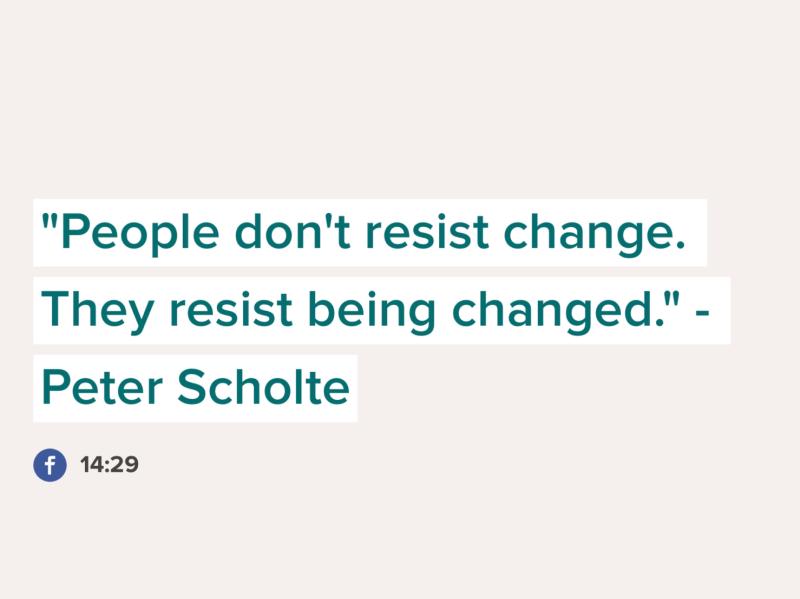
People resist being changed, especially a change without good reason, without clear goal, and without desirable reward.
Many times, changes are too focused in cutting cost, adopting latest technology and making processes lean. However, the keys to any transformation success are always about getting team members and customers inspired, engaged as well as recognized.
So in this part of the world, many of us need to work from home (WFH) because of the Coronavirus disease. Naturally, work from home / remote is very different from working in the office.
There are many online information about working from home but mainly focuses on the best conference tools in the market. From my point of view however, other than good conference tools, one actually needs a few other techniques and habits to make the whole WFH exercise effective, and ultimately less “conference call fatigue”.
Here are the 7 habits that can make your work more effective:
1. Have a Working Mood and Setting Up a Proper Workplace
Highly effective people will not work from home in pajama. Instead, they will change to casual wear (formal attire is a bit strange …) before they start working. The working mindset and mood is important.
In addition, find a place or corner at home to make it your workplace. Understand it is not easy if your home is not very spacious and you have your partner, parents, kids and pets around while you’re working. Therefore if needed, find a coffee shop nearby to setup your proper workplace.
In my case, I also set up my workplace with a stand-up desk, some background music (through a Spotify playlist) as well as a cup of hot black coffee.
2. Equip Yourself with Good Tools
There are many tools in the market good for conference meetings – e.g. conference tools like Zoom.us, Microsoft Teams, WebEx and collaboration tools for whiteboarding, mind-mapping, drawing, remote desktop, document sharing etc.
Select only a limited set of tools, within your company budget and don’t over-complicate the technology.
3. Preparation of Conference Calls
Send out invitation email to all attendants with meeting agenda, joining methods – conference call tool and dial up number etc. Also note the meeting time if your attendants were from different time zones, therefore a link to timezone website will be useful.
Send an reminder email to ask the attendants to install the conference software and mobile app beforehand.
More importantly, ask the attendants to test the video, microphone, share screen function to see how it works before joining the meeting.
4. Running a Good Conference Calls
Greet the attendants one by one, so they know they joined the call successfully and aware of other attendants.
Ask the attendants to find the mute button of the tool and mute it for the moment.
When it’s time to start the meeting, inform the attendants how you’re going to run the meeting, when will be the right time to ask question and the order to ask questions – e.g. one by one, or team by team.
Then run your meeting, according to the agenda. If you need to ask your attendant questions, make sure you start with the name of the attendant and remind him or her to unmute before answering the questions.
Wrap up your meeting with a verbal summary, follow-up actions and a thank-you to all attendants.
5. Post Conference Call Actions
After the conference meeting, send out an email with the summary, and follow-up actions, to all attendants.
Collect the feedback of the conference / collaboration tools.
Help the attendants to fix any connection and tools installation issues.
6. Tracking Tasks Status
Your usual way to track task status may not work anymore (e.g. Kanban board in the office), again some file sharing and online project monitoring tools will make the team’s life a lot easier.
7. Lastly, Keep Yourself Fit
Work from home also means you no longer need to walk to public transport, or carpark; you won’t walk around in the company; and you won’t walk to lunch. In essence, you exercise less if you work from home.
Therefore, instead of walking around, you shall find time throughout the day to walk, jog, or exercise in gym.
With the same token, you shall also spare some time to read, to join some online courses … as I believe you won’t want to join hours of conference meetings every single day.
In Summary
Hope these 7 habits help you a bit to make the WFH exercise more effective. If you know other good habits and tools, let me know.
I’ve been a big fan of Clayton Christensen’s works for almost 20 years now, and it’s really sad to learn about the news two days ago. I learnt a lot from his books and his HBX MOOC online course on Disruptive Strategy.
If you’re interested in Disruptive Innovation, Jobs-to-be-done, living a rewarding life, some unreserved recommendations –
Competing Against Luck: The Story of Innovation and Customer Choice – http://amzn.to/2hT2JMK





 M.Y. Lessons Learnt