
It is completely normal to feel overwhelmed by the sheer velocity of AI.
Every week brings a new model, a new feature, or a headline declaring that everything is about to change. When the landscape shifts this fast, figuring out where to begin can feel paralyzing.
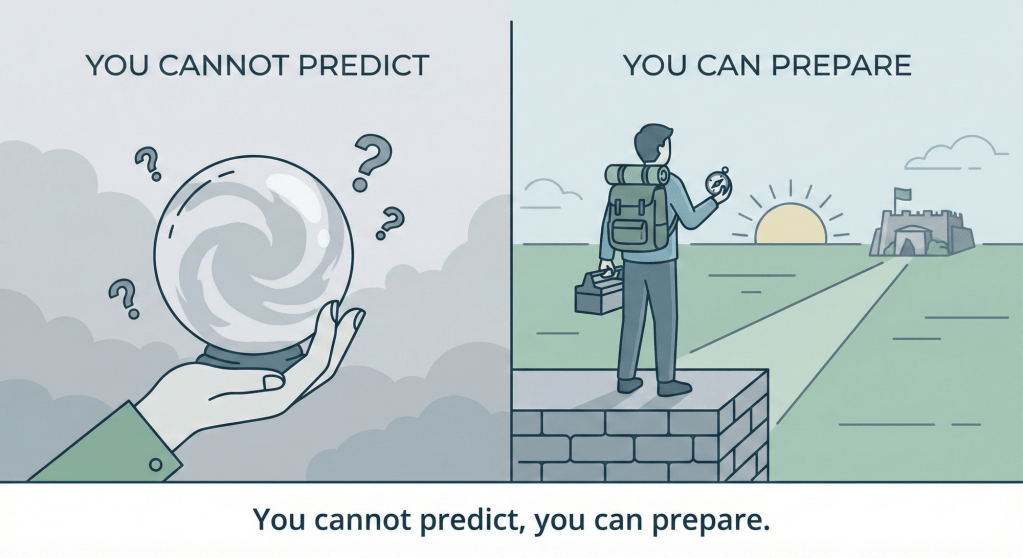
Billionaire investor Howard Marks famously wrote a memo in 2001 titled: “𝗬𝗼𝘂 𝗖𝗮𝗻’𝘁 𝗣𝗿𝗲𝗱𝗶𝗰𝘁. 𝗬𝗼𝘂 𝗖𝗮𝗻 𝗣𝗿𝗲𝗽𝗮𝗿𝗲.” While he was talking about financial markets, this philosophy is the ultimate playbook for navigating the AI revolution. Here is how to apply that mindset to get yourself ready for what is next:
𝗬𝗼𝘂 𝗖𝗮𝗻𝗻𝗼𝘁 𝗣𝗿𝗲𝗱𝗶𝗰𝘁
If you try to predict exactly where AI will be in three years, you will exhaust yourself. Will AI replace software engineers or make them 10x more productive? Which AI company will dominate? What specific jobs will disappear?
The truth is, no one knows. If you tie your career strategy to a specific prediction, you are building your house on sand.
𝗬𝗼𝘂 𝗖𝗮𝗻 𝗣𝗿𝗲𝗽𝗮𝗿𝗲
Preparation doesn’t mean knowing the future; it means building the resilience and adaptability to thrive no matter what the future looks like.
This brings us to the most crucial shift in how you should approach your AI education: 𝗠𝗮𝘀𝘁𝗲𝗿 𝘁𝗵𝗲 𝗰𝗮𝗽𝗮𝗯𝗶𝗹𝗶𝘁𝘆, 𝗻𝗼𝘁 𝘁𝗵𝗲 𝘁𝗼𝗼𝗹.
Tools are fleeting. Their interfaces change, and eventually, they get replaced. Capabilities – knowing 𝘩𝘰𝘸 and 𝘸𝘩𝘺 to apply technology to solve a problem – last a lifetime.
Think of it like photography. Mastering a tool means memorizing the menus on a specific 2026 high-tech camera. Mastering the capability means understanding lighting, composition, and human emotion. The camera will be obsolete in three years; the eye for a great photograph lasts a lifetime.
Don’t just memorize where to click. Instead, master the underlying skills that make AI useful:
- Problem Decomposition: AI struggles with massive, vague goals but excels at small, defined tasks. Learn to break big projects into bite-sized pieces an AI can actually execute.
- Critical Evaluation (Taste): AI generates infinite content. The premium skill is no longer creation; it is editing – spotting errors, biases, and mediocrity.
- Context Building: Models only know what you tell them. Master the ability to clearly articulate the specific constraints and goals of your problem.
How to Start Today
- Pick one friction point: Don’t try to automate your whole life. Pick one annoying, repetitive weekly task to experiment with.
- Experiment with curiosity: Treat AI like a brilliant but naive intern. When it fails, figure out why, adjust your instructions, and try again.
- Double down on human skills: Empathy, strategic vision, and relationship-building are things AI cannot do.
You cannot predict what the AI landscape will look like tomorrow, but by focusing on timeless skills and daily experimentation, you can ensure you are ready for it.
I’d love to hear from you: What is ONE repetitive task you are trying to use AI for this week? Let me know in the comments!
FutureOfWork #ArtificialIntelligence #CareerDevelopment #Productivity #AI #ContinuousLearning

 M.Y. Lessons Learnt